

President Trump won a huge victory Thursday when a New York appeals court threw out the massive, more than $500 million fine he owed in Attorney General Letitia James’ business fraud case.
The Appellate Division, First Department, overturned the whopping $464 million judgment that Trump, 78, faced after he was found to have fraudulently inflated his net worth by billions of dollars over a decade to get better loan and insurance terms.
Much of the case, brought by New York Attorney General Letitia James, against Trump, however, still remains in place and will now go to New York’s highest court as the legal battle between the state’s top lawyer and the commander in chief continues.
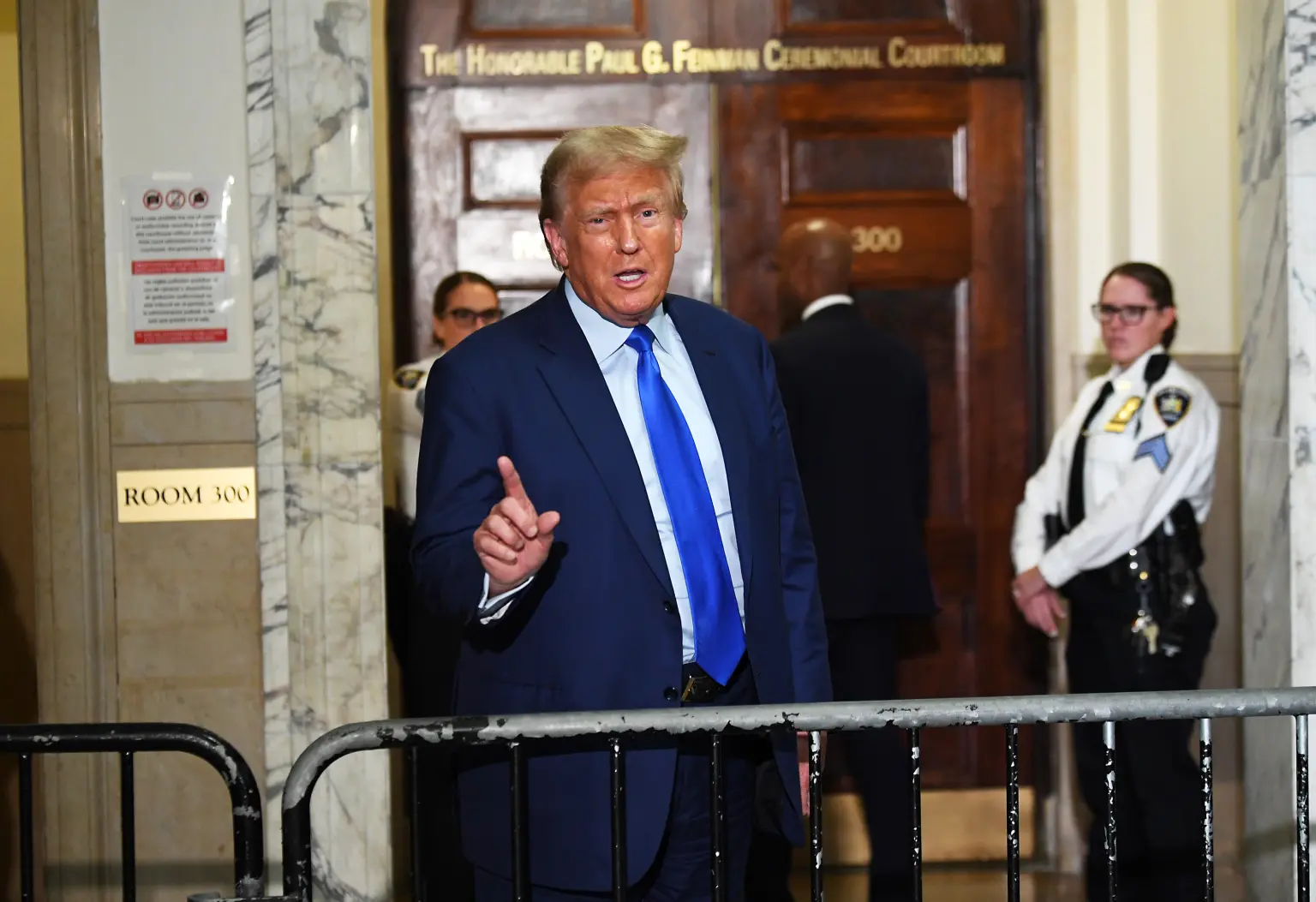
Matthew McDermott
The 323-page decision included three separate opinions, but all agreed the fine against Trump — which had grown to $515 million including interest — was “excessive.”
“While the injunctive relief ordered by the court is well crafted to curb defendants’ business culture, the court’s disgorgement order, which directs that defendants pay nearly half a billion dollars to the State of New York, is an excessive fine that violates the Eighth Amendment of the United States Constitution,” the main opinion by Judges Dianne T. Renwick and Peter H. Moulton read.
Still, the five-judge panel kept in place a ban on Trump and his two eldest sons, Donald Trump Jr. and Eric Trump, from running a company in New York for several years. And the ruling kept in place an order for an outside monitor to oversee and file reports on the Trump Organization’s business dealings for three years.
Those parts of the ruling had been on hold while the appeal was decided. And Trump posted a $175 million bond in place of paying the entire judgment during the appeal process.
Since there wasn’t a majority reached in Thursday’s decision, the case can automatically qualify to be heard in the Empire State’s top court — the New York Court of Appeals.
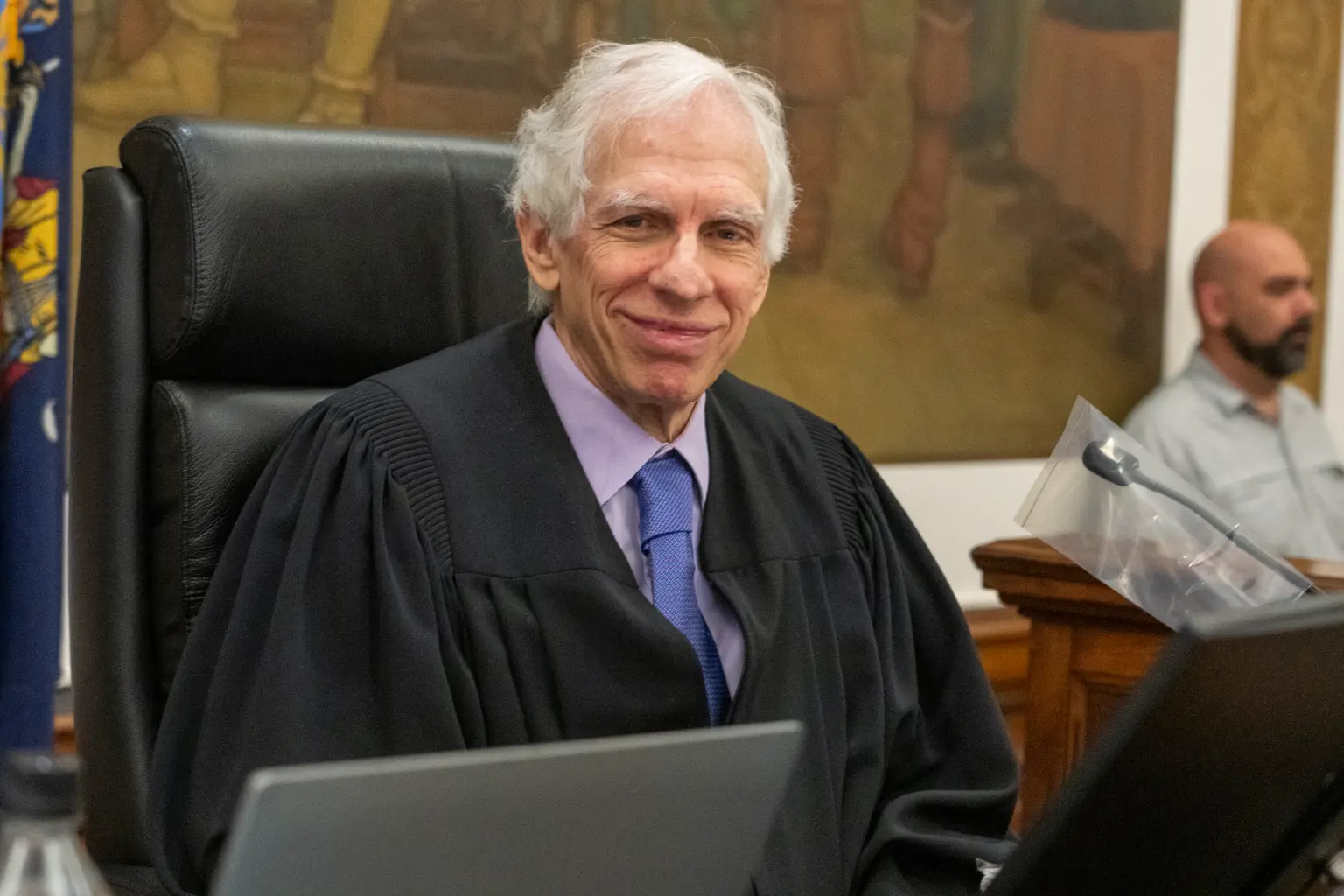
Steven Hirsch for the N.Y.Post
The interest and fines against everyone in the case — including Don Jr. and Eric, and other Trump Org. execs — have ballooned to over $527 million since the February 2024 ruling from Manhattan Supreme Court Justice Arthur Engoron.
Thursday’s decision was a blow to James — whose office prosecuted Trump — and to Engoron, as at least one of the appellate judges found Engoron made “errors” in his rulings on the case.
James accused Trump and others of carrying out a “staggering fraud.” But the Republican commander-in-chief maintained his innocence, claiming that he was a target of the AG’s politically motivated prosecution.
Trump lauded the ruling in two lengthy posts on Truth Social, repeating claims that the case was a “political witch hunt.”
“TOTAL VICTORY in the FAKE New York State Attorney General Letitia James Case!,” Trump posted. “I greatly respect the fact that the Court had the Courage to throw out this unlawful and disgraceful Decision that was hurting Business all throughout New York State.”
Meanwhile, James, in her own statement, glossed over the fact that the judgment was vacated, also playing the decision off as a victory.
“The First Department today affirmed the well-supported finding of the trial court; Donald Trump, his company, and two of his children are liable for fraud.”
James said her office would appeal.
Ed Martin, Trump’s political weaponization czar, called for James to step down as the Empire State’s top lawyer after he launched a probe into allegations that she committed mortgage fraud on a Brooklyn townhouse and a Virginia home.
Martin, the director of the Justice Department’s Weaponization Working Group, even showed up outside James’ multi-family residential property in Brooklyn last week.
“I’m just happy to be on a block looking at houses,” Martin told a Post reporter at the time. “I’m just looking at houses, interesting houses. It’s an important house.”
The appeal court’s decision follows a theatrical, 11-week trial that threatened to derail Trump’s image as a real estate tycoon — and brand him as a fraudster — as he campaigned to regain the White House.
Trial evidence revealed that Trump secured cushy interest rates between 2011 and 2021 after goosing up the value of assets like his Big Apple penthouse and Mar-a-Lago estate on financial papers.
Trump’s business falsely claimed that his Trump Tower triplex was 30,000 square feet — rather than its true size of 11,000 square feet — and used the phony figures to pump up the pad’s value to $327 million in 2015 after claiming it was worth $80 million just four years earlier, evidence showed.
Trump also valued Mar-a-Lago at $517 million on a financial filing despite his own tax broker admitting to listing the palatial estate’s “market value” at just $27 million in 2020, a witness revealed.
Trump tax representative Michael Corbiciero testified that he used the lowball valuation — which is far below the estate’s value if it were sold as a private home — by calling the estate a “social club,” a distinction that scored Trump juicy tax breaks.
The deed for Mar-A-Lago bars Trump from selling the estate as anything but a social club, trial evidence shows.
Trump nonetheless told banks and insurers that the Palm Beach estate was worth $517 million, and boasted during the trial that it was actually worth up to $1.5 billion, which would make it four times more valuable than the most expensive private home listed in the country.
“The frauds found here leap off the page and shock the conscience,” Engoron wrote in his ruling.
The ruling comes after some members of the five-judge appeals panel appeared skeptical in September of the merits of the lawsuit brought by New York Attorney General Letitia James, which led to the trial.
Judge Peter Moulton called the size of the penalty “troubling” and questioned if the law James had used to sue Trump, which doesn’t technically require someone to be “harmed,” had “morphed into something it was not meant to do.”
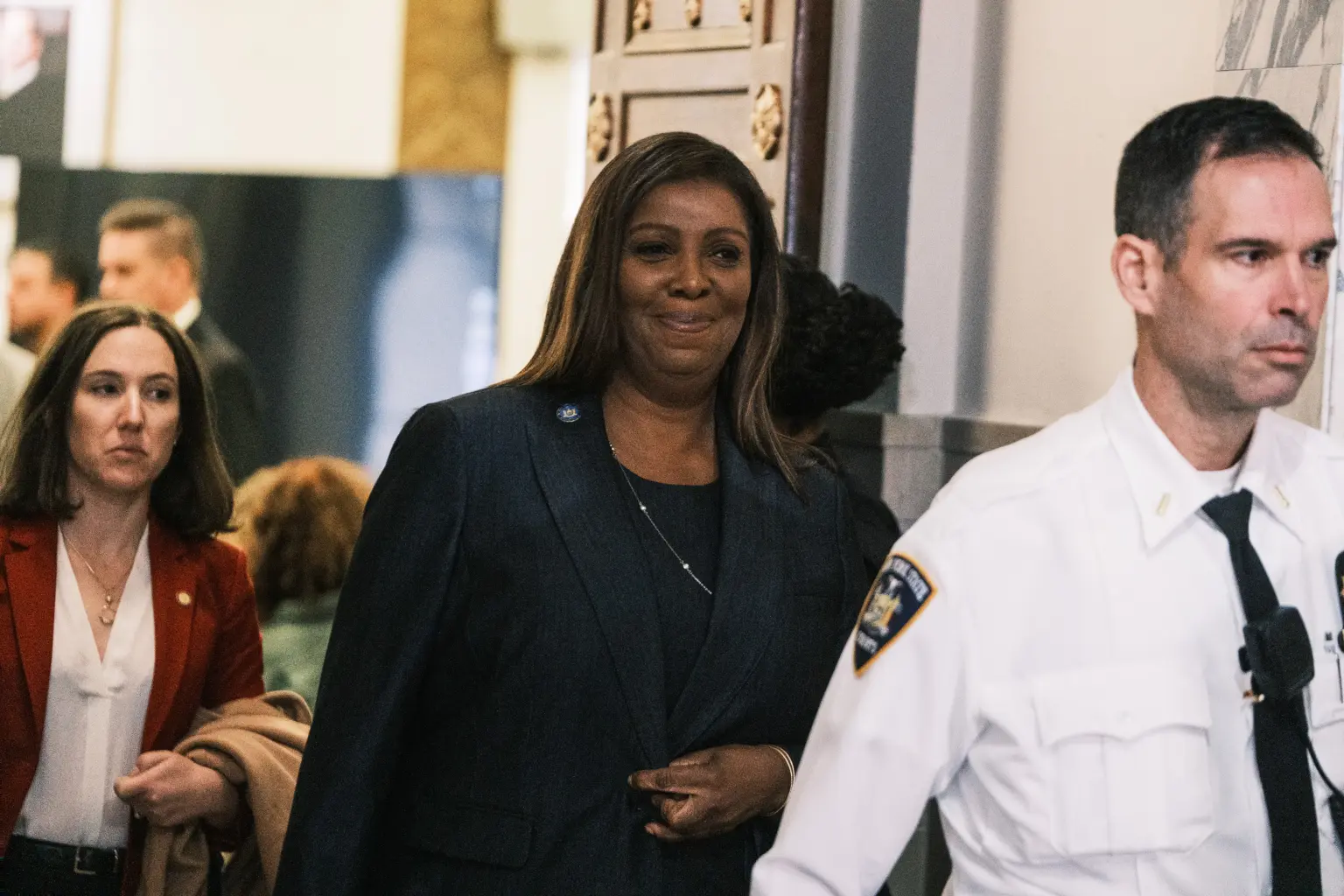
Stephen Yang for NY Post
The case roiled the soon-to-be 47th president, who chose to leave the campaign trail for several days to attend the trial, calling the proceedings a “political witch hunt” and insisting that he did “nothing wrong.”
Engoron and James are both elected Democrats, and James campaigned on a promise to investigate Trump, calling the then-president a “con man” and ″carnival barker.”
Trump’s lawyers argued that the case had no “victims” and that “sophisticated” companies like Deutsche Bank did their own research before entering into the deals, and were all paid back in full.
But James’ office argued that Trump’s fudged financial filings were nonetheless harmful to the marketplace as a whole — and Engoron agreed.
“The next group of lenders to receive bogus statements might not be so lucky,” he wrote in his ruling.